
Perhaps It Just Takes Time
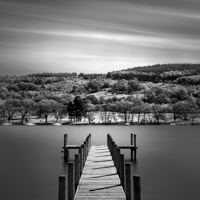
Join me, standing and staring; watching ripples on the water; the lazy movement of the clouds and their shadows on the hillside.
Read more about the images in this gallery HERE …
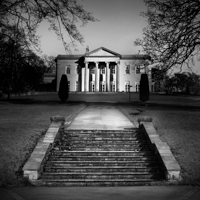
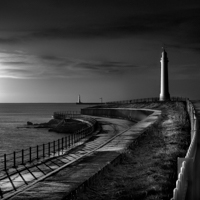
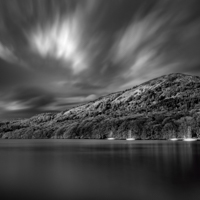
About This Gallery of Images
The series title, '‘Perhaps’ is a reference to my use (perhaps my overuse!)
of ‘perhaps’ and ‘maybe’ when I’m writing about photography.
When I first started to develop this series of photographs, the first had the title ‘Perhaps It’s Just Called Hope’; the next ‘Perhaps It’s Just Belief’; the next, in memory of Kate, ‘Perhaps It’s Just Called Time’.And the next? Well that was ‘Hope’ again. And the next, with the lighthouse at sunrise – maybe optimism, hope, belief, inner strength, confidence, faith, peace – I wasn’t sure precisely which. And I wasn’t sure it really made a difference, to me or to you, if I tried to be specific.
So, I stepped back from the conundrum of the titles and concentrated on the images themselves and, whilst working on them, one trait began to rise above the rest, unbidden – time.
What is this life if, full of care,
We have no time to stand and stare.
No time to stand beneath the boughs
And stare as long as sheep or cows.
No time to see, when woods we pass,
Where squirrels hide their nuts in grass.
No time to see, in broad daylight,
Streams full of stars, like skies at night.
No time to turn at Beauty's glance,
And watch her feet, how they can dance.
No time to wait till her mouth can
Enrich that smile her eyes began.
A poor life this if, full of care,
We have no time to stand and stare.‘Leisure’ by W.H. Davies
I knew the opening couplet well – it’s been used in enough advertisements – but I was surprised, when I read it in full, that it captured the essence of these images so fittingly.
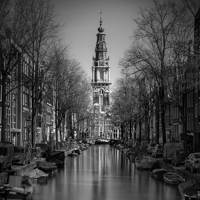
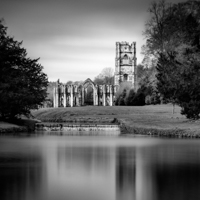
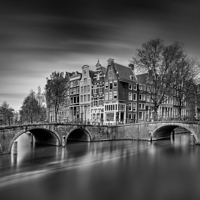
Most of this series are ‘Long Exposure’ photographs, which means that the camera was on a tripod with a dark glass filter fitted in front of the lens. The technique reduces the amount of light entering the camera and, in turn, means the shutter has to be open for longer; thus the shutter time is extended from a fraction of a second (the norm) to several minutes depending on the darkness (density) of the filter glass.
So that’s the ‘how’. The ‘why’ is that you get a different kind of photograph.
Normally (i.e. with a short, fast shutter time) everything in the photograph is frozen in time – a fountain stops playing, drops hang in the air; children are suspended at the top of a jump; walkers, dogs, cars – all captured at a single instant – mid stride, mid bark, mid rush. But Long Exposure blurs and softens the angularity and urgency of these moving elements – blurs a lot or a little depending on the length of time the shutter is open. And now the photograph shows the passage of time; the path of clouds, not just their shape; a human presence not specific people; the excited movement of a dog, not its pedigree or breeding.
And what am I doing all the while that the camera is busy?
Well, following Davies’ advice, of course – standing and staring; watching ripples on the water; the lazy movement of the clouds and their shadows on the hillside; the flight of birds. And listening too – the sound of ducks amongst the reeds; the distant hum of traffic; rustling leaves.
Importantly, I have a different engagement with this world around me, far removed from the hustle and bustle of 21st century living. It’s mindful, contemplative, reflective. My breathing slows, my mind is calmed. Slowly I absorb the entire scene, not just fragments. I peer into its corners; explore the periphery of the view, potential jewels discarded by normal vision.
I have the measure of this landscape – big skies; openness; natural beauty.
Now I know I could have this kind of experience without the camera; I could just lean on a seawall, or sit on a park bench, or just ‘stand and stare’ without any equipment at all – no tripod, no camera, filters or timer. But it’s like having an old friend alongside to share it with – me and the camera – making it richer, deeper, more rewarding; with the bonus that I can re-live it all again when I get back home and start to process the photo. Turning it into a black and white image with a darker sky gives me the pleasure of re-engaging and enhancing those magical, ethereal qualities.
And I hope you can enjoy this just as well, at one removed.
Perhaps it’s just called sharing.
Postscript
One of our favourite places to ‘stand and stare’ is Otley Chevin, a ridge of millstone grit to the north of Leeds which looks out across the Wharfe valley. Just 10 miles from home, it’s a welcome place to clear one’s mind – to blow away the cobwebs – and recall being there for the Millennium Night celebrations and seeing firework displays all along the Wharfe Valley, in one direction, and the Aire Valley in the other.
And December 31st was also Mum’s birthday – and I’m always minded of her delight, and her joke, was that these kind Yorkshire-folk were celebrating her 77th birthday in such a spectacular way.
I often take the camera with me to the Chevin – set it up for Long Exposure and feel soothed by sharing the time there with the camera and my memories. There’s nothing much to show you yet – I've not produced an image to match the one which fits so comfortably in my mind’s eye – but that doesn’t seem to matter much. One day I will.
Perhaps it just takes time.
Paddy