
A Woodland Miscellany
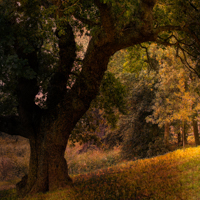
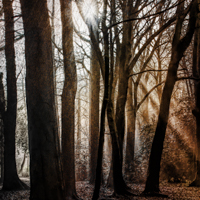
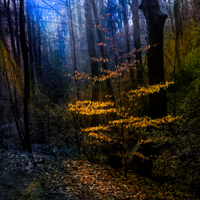
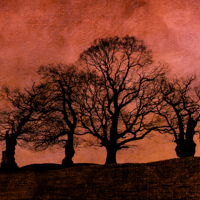
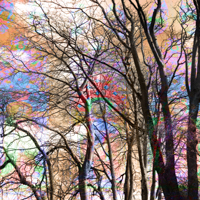
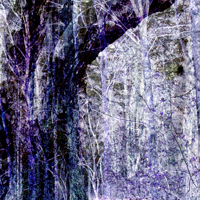
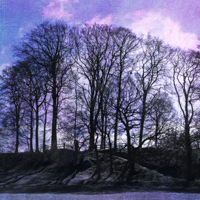
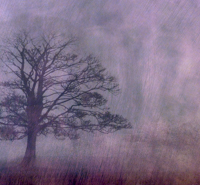
This is not a cohesive series which flows artistically from one image to the next but a potpouri – a miscellany of images which aim to communicate the rich experience of our woodland walks.
Read more about the images in this gallery HERE …
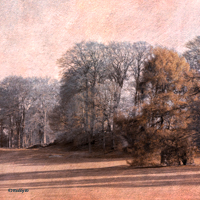
About This Gallery of Images
We had started walking through Ram Wood, on the northern corner of Roundhay Park simply because it gave us quiet access to our local park on busy weekends; then I saw an article about an NHS initiative called ‘A Dose of Nature,’ (that people with mental health problems benefit from contact with nature); which led me to the Japanese wellbeing therapy of forest bathing; and so we added all the other pockets of woodland which lie within the park. Firstly, Castle Wood, then up to the Ring Road through Great Heads Wood and down to Waterloo Lake. And then back again – up the hill.
At the same time, I picked up David Ulrich’s book, ‘Zen Camera’ and started his first lesson on observation, using the camera to create a daily record. And the more I carried the camera, the more I saw, the more I experienced – fulfilling Dorothea Lange’s quotation that ‘the camera is an instrument that teaches people how to see without a camera’.
And it all felt amazing – with tangible benefits in our physical and mental wellbeing. I started thinking about feelings; emotions; about sense of place; sense of self; memories …. But the actual images I was producing didn’t reflect any of this wonderment and wellbeing. And this was a cause of great confusion because the woodlands always delivered one of the things which photographers crave – ‘interesting light’.
I had this ‘interesting light’ a-plenty – so why wasn’t I producing ‘interesting’ images?
Why did they feel ‘distant’ and unemotional?
Why was I remote, detached? An observer, not participating?
With hindsight it seems obvious that it was simply inexperience – but hindsight specialises in making things seem blindingly obvious, doesn’t it? I didn’t understand that I need to evaluate every photograph on its own merits and establish its photographic characteristics before I try anything ‘interesting’. Instead I imagined that the techniques and styles which had made the last image look interesting would automatically suit the next one – a practice which only works if the images have similar traits.
Until then, I’d been working in monochrome and, most often, on architectural images and these did have similar traits i.e. the need to use light and shade to establish depth and form (i.e. three-dimensions). But the woodland was very different – it was far more immersive and seemed to present itself two-dimensionally, with little sense of distance ahead or behind and almost in silhouette.
In the search for solutions I even considered the unimaginable – tried working in colour for the first time! But that didn’t work, didn’t deliver the pot of gold; whichever green I chose it was too yellow, or too blue – too wrong. And the sky was problematic too; too blue, too strident – and never the right amount of light and bright etc.
If I’m feeling a little bit pompous, I’d describe what followed as ‘analogous thinking’ – an idea which Robert Rodriguez describes as “combining and adapting ideas from as many sources as possible” – though (as I've explained HERE …) it just felt like ‘playing in the sandpit’ – combining ideas from photographers (past and present) as well as ideas and movements in art history. And it really was great fun – double exposure, background-blur; colour became experimental rather than factual as I tried to express how I felt instead of what the camera saw; and then I overlaid imperfections or blended textures on the top as further emphasis to both emotional and tactile feeling; and then … and then …
Steadily, what emerged was a new visual language which, I hope, communicates the richness and excitement of the multi-sensory experience of our woodland walks.
And that’s what this gallery of images present; not a cohesive series which flows artistically from one image to the next but a miscellany – a potpourri of woodland wellbeing.
Postscript
Unexpectedly, this curiosity about our local woodland has delivered richly in other directions. For example, I've learnt that lone trees are often the remnants of old field-systems, part of an old field boundary – and now, when I see one standing in splendid isolation, I feel better able to understand and interpret the countryside around me.
I've learnt how to approximate the age of a tree from its girth; about the life-cycle of trees; about the Victorian legacy of urban trees; learnt that ancient woodland is defined as being in existence since 1600 and likely to be unplanted i.e. developed naturally.
I've read ‘The Hidden Life of Trees’ by Peter Wohlleben; become reacquainted with The Meanwood Valley Trail; pored over local maps from the 1840s onwards (thanks to the National Library of Scotland and their digitised collection); discovered how local names were lost or were absorbed – how the identity of Bracken Hills Wood, for example, was swallowed by its larger neighbour, Gledhow Valley Woods, so its name survives only as Brackenwood Road.
I've learnt about ‘The Forest of Leeds’ – that’s the name our local council applies to about 50 pockets of woodland in and around the city which add up to 3660 hectares (i.e. to a square some 3.8 miles along each side!) Is there a local equivalent of ‘Munro Bagging’ I wonder, where walkers feel the need to visit every bit of woodland round the city, in turn?
And everything I read, every piece of knowledge gained, seems to deepen my love, respect and engagement with the city around me.
So, what started as wellbeing-walks in the local park continues to deliver warmth and enrichment, thanks to a sprinkle of curiosity thrown in!
Take care
Paddy