
A Voice for Unexpressed Feelings
I believe there’s a second way – second, not secondary – in which storytelling photography can support and encourage my wellbeing and resilience, and that’s in giving a voice to unexpressed ideas and feelings.
I became less mobile early in 2022 and, as a result, I stopped doing my ‘noticing walks’ (fortunately to be replaced by an interest in cyanotype printing). And because I’d always associated Ruth’s ideas and values with the walks, I somehow imagined that her philosophy had dropped away too.
But if I look at the images I’ve produced over the last two years, the spirit of Ruth permeates them all. I’ve re-traced walks and holidays, retrieved and embraced memories, and found a visual language to voice things that otherwise, I couldn’t say – couldn’t express verbally – an outlet for intractable, unexpressed feelings. And this led to my most powerful story-images – the most expressive, intense ones – ones which explored the emotional impact of the previous year.
Stylistically, I created these images in a conventional manner, as diptychs and triptychs, and hence in that respect they could be categorised in any of the more established genre of photography. But in my mind, they’re stories because it was the storytelling principles and ethos that enabled me (gave me the tools and the permission) to voice a lot of choked-up feelings.
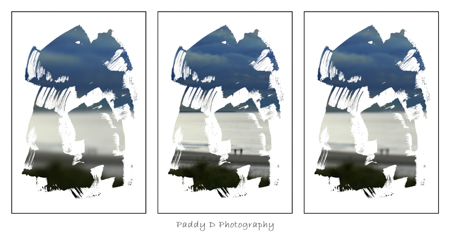
'Connection and Disconnection'
Windows on the Past
I found visual metaphors to explore the disconnection between my life‑before‑fractures and my life‑after‑fractures (above); and to express the way that I – and my life – felt broken (below).
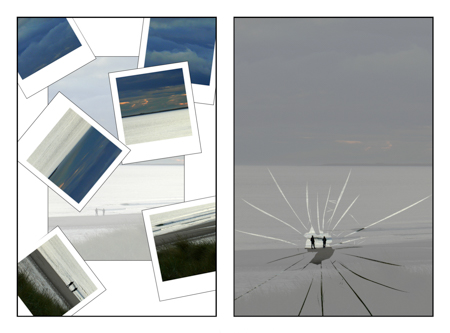
'A Shattered Life?'
Then later, as my mood lifted, I was able to chart this change in my perspective and an increasing sense of empowerment (below).
I was ‘reframing my now’, to use Ruth’s phrase.
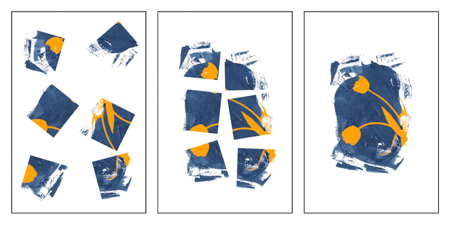
'Repairing'
And now that I've noticed Ruth’s presence, I can see it everywhere (not solely in the stories about noticing walks); in the feelings I experience when I create my stories and when I look at them at a later date; in the way I respond – being meditative, more confident, more forgiving, less self‑critical; in the way that I've shifted my “perspective toward valuing innate qualities (as opposed to physical or comparative ones)” to use the words of Wendy Smith. Ruth didn’t just get the ball rolling, she carefully steered, nudged and encouraged me along a new way of thinking, a new creative path.