
Digital Photography and Belonging
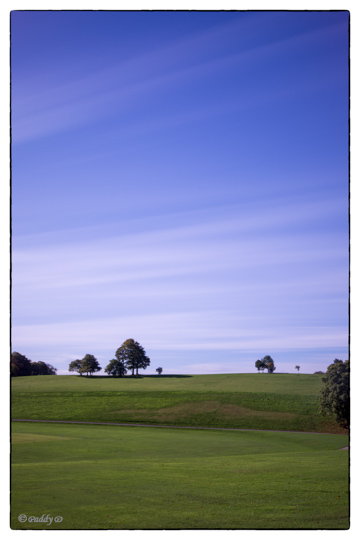
Hill 60,
Roundhay Park, Leeds
I tend to be pragmatic when I’m choosing the location of a photo shoot, particularly when I’m doing the assignment for a photography course. I want to make sure I can easily return to it and retake the photographs if the first visit is only partially successful. And browsing through the photos I’ve taken for all the different courses underlines this approach – thousands of images taken within 30 minutes’ drive from home, almost all on the north side of the city.
For my very first assignment for the Open University course in 2008, I started very close to home indeed – in our back garden! And then I walked over to our local park (Roundhay Park, 20 minutes away). And for my last assignment (on the subject of landscape, for my mentor Julia Anna Gospodarou) I went to St. Aidan’s Nature Reserve (a 20-minute drive). And over the weeks, months, years of courses, mentoring and assignments in between, I've been to more of our nearby parks (Temple Newsam, Golden Acre), to Harewood House; Lotherton Hall; RHS Harlow Carr; the University campus; Otley Chevin; Adel Church; Kirkstall Abbey; Markenfield Hall and the Cow and Calf rock outcrop on Ilkley Moor.
Most of these are open, green spaces and unknowingly we benefited from the green therapy, although we didn’t recognise it as such for another decade.
Then there were Victorian buildings in the city (the Town Hall, Civic Hall, Leeds Museum, Leeds Library, Leeds Art Gallery, the Corn Exchange); new developments down by the Leeds-Liverpool Canal (the Royal Armouries, Clarence Dock); Millennium Square; City Square; Leeds Market; the River Aire; Leeds Minster.
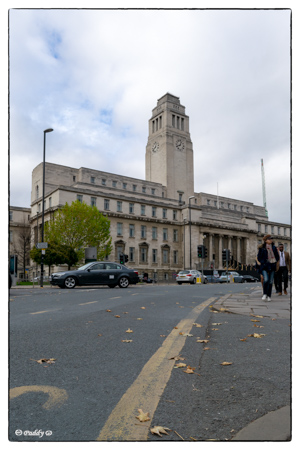
The Pakinson Building, University of Leeds
Always a meeting place
The canal itself also features in the assignments and repeated visits to take photographs sparked an interest in its history; when I was standing on the old flagstones, surrounded by the 19th century warehouses and canal buildings and reading a sign for Lock No. 1, there was something engaging and intriguing which made me want to know more. Lock No. 1 – it's the start of something – but the start of what exactly? Yes, I know that the canal starts in Leeds and ends in Liverpool, but what route does it follow, who built it, when? What were they importing into the city? Or was it to export the city’s goods to Liverpool and America? What about the city’s links to the east coast and the Low Countries along the Aire and Calder Navigation (which proved to be older than the canal).
And the same spark of interest was ignited at St Aidan’s Nature Reserve. Soon I was learning about the opencast mining there; about ‘Oddball’ (the walking-dragline excavator) and its journey from manufacture in America to mining in Yorkshire; about the floods when the River Aire breached; about the area’s subsequent reclamation as a nature reserve. Or I was trying to imagine Roundhay Park without The Mansion, the lakes and Hill 60, but as the 12th century deer park. Or I was poring over local maps from the 1850s, seeing old familiar names – Mean Wood, Weet Wood, Stain Beck – now describing areas of the city rather than woods and streams.
I had no idea that over the years this would have a cumulative effect until I scattered a random selection of printed photos across the kitchen table a few months ago. I can’t remember why I was looking at them, but I do remember how I felt – that I’m no longer a student who just stayed on, and was still living here, 45 years later. I belong here. I’m southern by birth but I owe the south nothing more – it’s Yorkshire which gives me a home and nurtures my roots. After years of quite a superficial relationship with the locality and its facilities (living on the city, I call it) I was experiencing a strong sense of belonging – I’m now living in the city.
That’s what digital photography has done for me.