
Digital Photography and Wider Interests
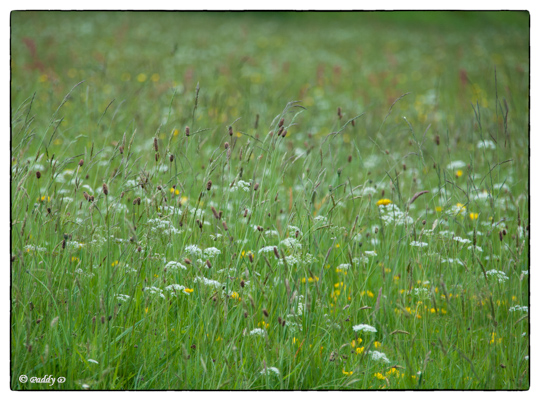
Bodnant Gardens, near Conwy
Being aware that art has centuries of history to its name, far longer than photography, I took a 10‑week online course with Oxford University Continuing Education Department in 2011, entitled ‘Learning to Look at the Visual Arts.’ I was particularly drawn to the course because the topics I’d be studying had a direct relevance to photography – composition, space, form, tone, colour, subject matter – and I’d concluded that there must be plenty I could learn from it, which would inform the development of my own photography.
And, without trying to sound overly dramatic, the decision changed my life – well my cultural life that is. It led to us visiting an art gallery for the first time – The Mercer, in Harrogate.
Until then I used to joke that we only ever visited castles, cathedrals, bookshops, museums and teashops. You see, Ian had received the same childhood message that I had – that art belonged in a different, distant, alien, inaccessible world which had nothing in common with the ‘real’ world we inhabited. And, as a consequence, we’d never set foot in one.
From there we started to make up for lost time, going locally to The Leeds Art Gallery, The Henry Moore Institute, Leeds University Art Gallery, Sunny Bank Mill Gallery in Farsley; next wider afield in Yorkshire, The Hepworth in Wakefield, The Yorkshire Sculpture Park, York Art Gallery, Wensleydale Galleries in Leyburn. Then London and The Courtauld, The Wallace Collection, The Tate, Tate Britain, The National Portrait Gallery and The National Gallery; The Liverpool Walker; The Lowry in Salford; galleries in Edinburgh; in addition, we looked out for exhibitions. Then, perhaps more surprisingly, we developed enough confidence to visit small, independent galleries, like The Getty Images Gallery near Hyde Park in London (where we saw a stunning exhibition of Herbert Ponting’s exquisite photographs from Scott’s Terra Nova Expedition to the Antarctic in 1911). I carried a notebook too, so I could make a record of my favourite paintings and see them again on the Internet.
Sitting here, remembering these experiences and writing about them, I realise that I’m smiling; I’m filled with amazement at the cultural change we effected – and how much pleasure it has brought us.
There was also another underlying issue; we’d discovered that the art world was more accessible and more relevant than we’d imagined. We found we could relate to it through my photography, which was providing a stepping-stone of understanding. It meant we knew some fragments of ‘alien-speak’ – and, because of it, we became more positive and confident. And that’s been as valuable as the visual pleasure and excitement we get from the artworks themselves.
After that, the initial impulse to ‘inform my photography’ extended into learning more about the things I was photographing and about the photographic world I was joining. Driven by curiosity, relevance and usefulness combined with the accessibility of information on the Internet, my interests widened further. There was still a lot of history involved but no longer revolving around castles, cathedrals and museums (albeit we still went to a lot of teashops!) Now it was about local history (especially the canals) and the history of photography (particularly women photographers).
My interest in our immediate locality also increased, aided by the National Library of Scotland and their extensive, online collection of UK maps from 1842 onwards – both fascinating and absorbing. Then my newly-enabled curiosity reached into the natural world – birds, flowers, woodlands and trees – we set out (armed with the ‘I Spy Book of Trees’) and visited a lot of gardens, particularly those containing walled gardens and plant collections. In turn, I became engrossed in the history of botanical illustration (the art and the artists) and the history of tulips!
So that’s what photography has done for me – opened my eyes and my mind; filled them with wonder; opened up my world and taught me to be childlike and curious again.
But perhaps you’d be wise to ask me about something else next time we meet; don’t mention my photography or you’ll still be listening to my overexcited answer, four hours later.