
Fine Art Photography and Flow
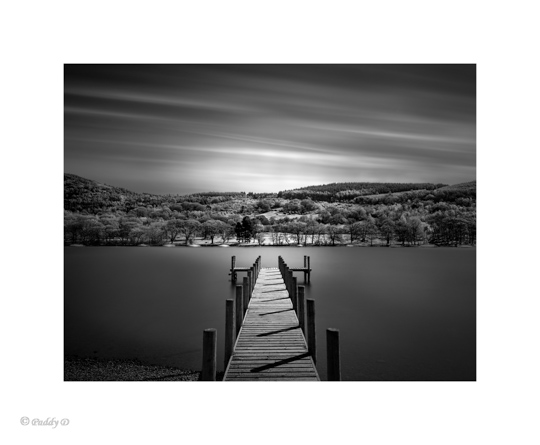
Lake Windermere
In 'Perhaps' series
I’ve been thinking about the different ways I edit my photos and the amount of time I spend on editing. There are some occasions when I just do light-touch editing. This is not because I subscribe to the much-held view that 10 minutes spent editing is 9 minutes too long – but simply because I've only got light-touch objectives for the photo i.e. to create a record of something I've seen during an outing; hence a light-touch edit is all it needs. I assess the basic image on photographic criteria (i.e. composition, balance, tonal range etc) make quick adjustments, and it’s done.
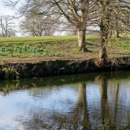 The image alongside gives an example of light-tounch editing, which only took a few minutes to complete.
It shows the Upper Lake in Roundhay Park, and is taken from my series 'Just as Nature Intended', which provides a snapshot of views in and around Leeds across the different seasons.
In contrast there are other times when I spend hours on a photo – planning it, editing it and, in the case of the image of Lake Windermere (above), re-working it four times! The process always starts with light-touch editing, making basic adjustments, but more importantly, I’m trying to recreate the sense of 'being there', to represent my feelings, my memories – now I’m into fine art editing. And, time and time again, I lose myself in it; I become absorbed, focused, totally immersed, time falls away. External pressures recede and, with them, stress, anxiety and dis-ease subside. As they say in sporting circles, I’m ‘in the zone’ – or in a state of ‘flow’ in psychological terms.
As an aside, I favour the term ‘flow’ over 'in the zone' – partly to honour my days as a pipeline engineer, partly because the concept was named by Mihaly Csikszentmihalyi. I’m so relieved that I chose Civil Engineering at university, not psychology – just imagine having to write about him in exams (though I mastered the spelling of the word ‘necessary’ in primary school by writing it out 100 times, so I guess I could have found a way of coping).
One of the preconditions for a state of 'flow' is that there's a good balance between the challenge of the task in hand and one’s skill level – knowing it’s a demanding task but having confidence in one’s ability to complete it. (The opposite is being so apathetic about a low challenge/low skill task, that one’s not even bored by it!)
And I realise that’s what fine art photography means to me – the challenge; it provides an environment in which I can feel challenged, and feel I can rise to the challenge. And it means I can reap the positive outcomes – ease, contentment, satisfaction, pleasure, motivation, that feeling that I’m flying.
It’s clear too, that being aware of 'flow' has the potential to magnify its effect. In making this explicit, flow now feels flowier! And as I think back to images I’ve worked on in the past and projects I’m planning for the future, I know that I now value them a little more highly.
P.S. I've been thinking about 'flow' only in the context of fine art photography and photo-editing. But, noticing that I've been sitting at the computer for over 90 minutes now (working on this web-page) and I've no idea where the time went, I realise that this lockdown-project is, itself, 'flowing' – and I'm experiencing all the positives, the pleasure, the fun, absorption, creativity.
I'm flying and it's magical.